Tuesday, November 9, 2010

Rosemary For Christmas (Propagation)


I love my herbs as much as my heirlooms for the folklore and the history. Have you ever noticed all those pretty little Rosemary Christmas Tree Topiaries at the market for the Holiday's. I've always thought they made such splendid little trees for Christmas.

However, there are tales told of Rosemary as far back as biblical times. It was said that the Virgin Mary had thrown her blue cloak over a Rosemary bush that bloomed of white, and from that time on it has always bloomed blue as remembrance of the Birth of Christ.

Folks during the Victorian era would lay sprigs of Rosemary on the floor all around the base of their Christmas trees, so that as one stepped upon them the sprigs would release their fragrance thus to remember Christ.

There are symbols to which each herb may represent and as for Rosemary, it is of course remembrance & friendship.


Rosemary Cuttings

November in Southeast Texas is my favorite time of year to make Rosemary cuttings to pot up for next spring. It reminds me that Christmas is just right around the corner.

It is also a companion plant for my lovely little carrot sprouts to deter the carrot fly. So as I take my cuttings, all the extra needle like leaves I remove from the bottom of the stems, I will sprinkle around in the beds where my carrots are growing.

Rosemary also deters the cabbage moth and a few sprinkles around them will help keep them safe. By planting companion herbs directly in the garden with your vegetables and fruits you'll begin to discover how they assist you with a vast array of organic growing efforts.


Rosemary growing with my dormant Grapevines
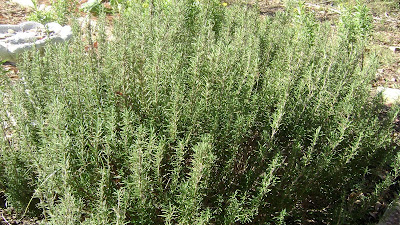
It's a fact that Rosemary is an evergreen in Southeast Texas. Last year we had an exceptionally cold winter with a few days of snow. The plants all remained green and hardy through it all.

Just remember that just because it is cold out doesn't mean to quit watering when things become dry, although Rosemary holds up quite well to dry spells. This may mean watering once in two weeks compared to just about every other day during our hot dry periods in the summer.

This will provide you with an opportunity to stick your fingers in the dirt to check it. After all, according to mental health experts, contact with your garden soil releases a happy chemical called Serotonin to our brains and keeps us from depressions. So I call it my daily dirt buzz. That could be another blog I suspect. At any rate, the soil can be deceiving just upon a glance, especially in the winter time.

So by all means enjoy your Rosemary for Christmas this winter. Gaze upon it with remembrance for it shall bloom of blue.

Share it with friends and family this holiday season with some sweet and savory Lemon Rosemary Victorian Christmas Tea Cookies. I would love to blog my recipe for you the moment I begin my holiday baking.

Just be sure to have your Rosemary ready and if you plan to do cuttings, pick up some root hormone at your local garden center. Better yet, Make Your Own out of Willow Bark! Dab your cuttings in it and stick them in a pot filled with a light and loose compost and organic soil mix.

I add about 1/4 peat to it. They seem to enjoy a slightly acid soil which the peat provides. They need to be kept moist to root, but not soggy. Don't let them dry out completely. They will grow roots and be ready to put in the garden or decorative pot for next spring.
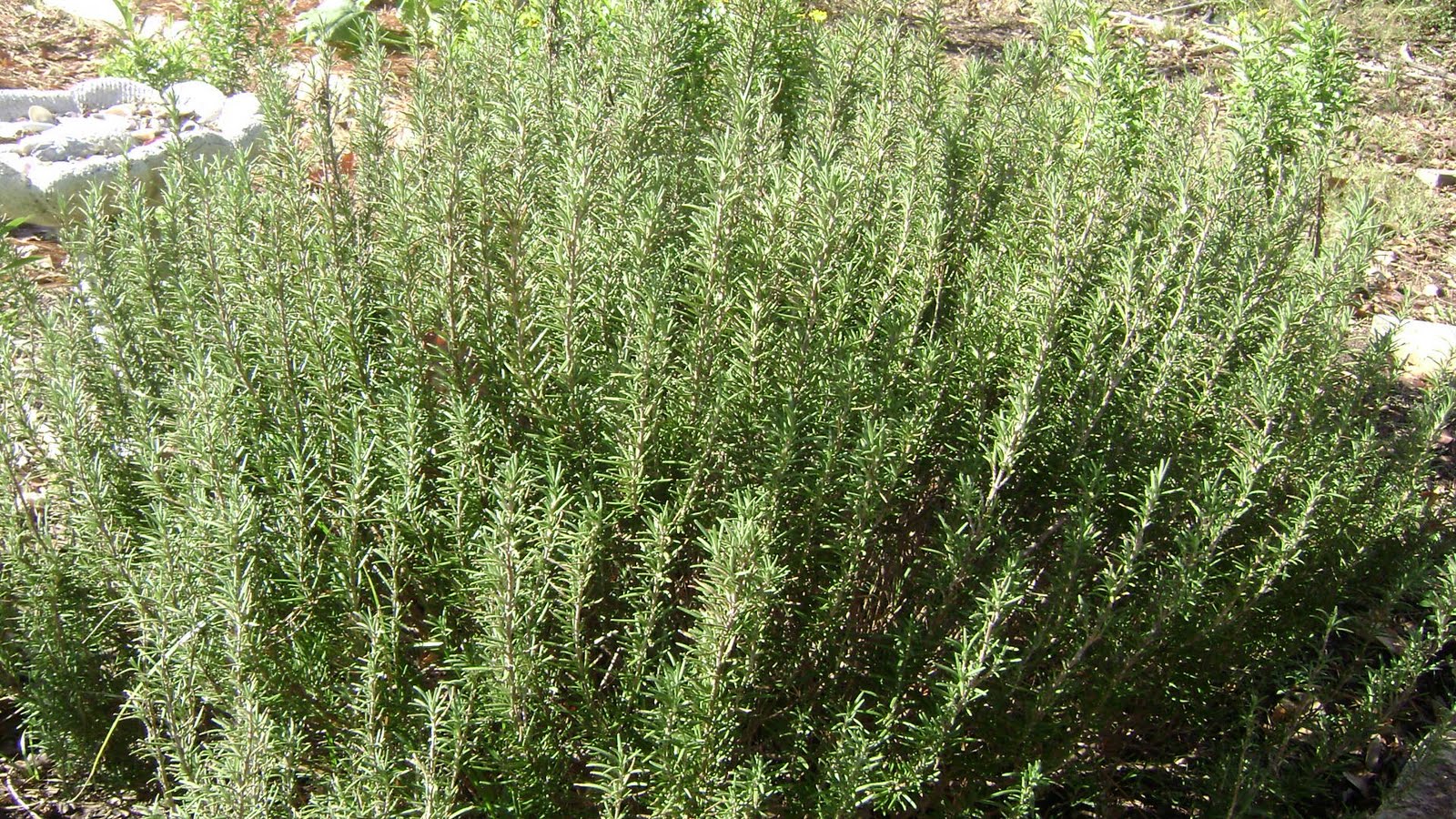

Mother Rosemary in my herb garden

Happy Gardening!!
Pammy

Monday, November 8, 2010

Texas Heirloom Salad w/Herb Infused French Wine Dressing


This is another reason that I love November in Texas. It's finely cool enough to grow all the salad goodies.

With a couple of cucumbers that did great through the two recent frosts, a Green Zebra Tomato and some heirloom greens, we have the start of a wonderful fresh salad. 

For the greens I have a heirloom variety of a Wild Garden Kale Mix and a Romaine Lettuce that is deep burgundy called Outstanding.

Kale is great steamed, but it is also has a mild sweet flavor that I love freshly chopped in the salad. 

I plan on adding a few fresh herbs in here, a little Italian Parsley, Lemon Thyme and perhaps a some young shoots from the Hopi Red Dye Amaranth. 

I'm also adding some Black Olives, sliced mushrooms and some Crab Legs on the side. This goes great with the Red French Dressing and it is so easy to make. Once you have it you will want it all the time. 

It's a little naughty in the sugar department, but you can substitute the sugar for some raw honey or organic raw sugar. I just have a tiny bit with my salad so I can enjoy the wonderful flavors of the south. 

Add a loaf of some fresh homemade Honey Wheat Bran Bread with your fall salad.


Herbs of the Day
Lemon Grass, Pineapple Mint, Loveage, Oregano, Pineapple Sage, Rosemary, Bee Balm, Lemon Thyme, Dill and minced onion and garlic.


Herb Infused French Wine Dressing 
(makes 1 Quart)

Ingredients

1 cup ketchup
1 cup raw honey or sugar
3/4 cup olive oil
3/4 cup organic sunflower or safflower oil
1 cup very good quality red wine or white wine vinegar 
I've been know to half the vinegar with some red wine
1 tsp sea salt
1/3 cup minced or grated onion
1 tsp. garlic powder or 2 or 3 minced garlic cloves
Herbs of choice, minced or finely chopped

Directions

Put everything in the blender and mix until it's thick. It lasts in my refrigerator for about 3 weeks before my family of 4 adults eat it all.


Photo of Hopi Red Dye Amaranth in my fall garden


Have some fun with your garden!!

Pammy

Tuesday, November 2, 2010

Heirloom Pumpkin Pie Cobbler


Heirloom Pumpkins are pure art from the earth. Each one with such a unique history and charming character. I almost dislike cutting into one for the sake of my utmost joy of peering at them sitting about. I finally got to bring a small piece of Southern France to my Texas kitchen. The Musquee de Provence, also know as the Fairytale Pumpkin. It is an extremely beautiful copper color and deeply ribbed heirloom pumpkin shaped like a flat cheese wheel. It was first brought to American in 1899. I've heard tell that in the French open markets they will use a machete to carve off a piece for sale, using the deep furrows between the pleats as a cutting guide, then simple weigh the chopped piece seeds and all. From further inquiries it sounds as though it is one of the French favorites for soups. I will surely need to bring down my big soup pot and give it a try. For baking however, be sure to drain your pumpkin through some cheesecloth. They are a little more juicy than the common pumpkins you would buy at the supermarket. Also you will most likely want to roast those yummy pumpkin seeds. Unless you know the farmer that grew your pumpkin personally the seeds are not worth replanting. Most of the pumpkins have most likely cross pollinated with another variety if more than one type was grown. It's far better to order your seeds from a good heirloom seed company, rather that go through the process of trying to grow something that will not be true and being disappointed with the end results. You will most likely end up with pumpkins that don't look or taste like a pumpkin at all.

Now, for the Heirloom Pumpkin Pie Cobbler. It's just delicious with a good hot cup of coffee. It's just to hard waiting for Thanksgiving for that creamy pumpkin pie. This recipe will give you all the essence of fall in every smell and bite.

Ingredients

For Crust and Topping

1 1/2 cup whole organic oats
1 1/4 cup unbleached all-purpose flour
3/4 cup brown sugar
3/4 cup real butter at room temperature
1/4 cup finely chopped pecans or walnuts
1/4 cup raw organic pumpkin seeds
1/8 cup raw organic sunflower seeds
1/8 cup golden plump raisins
1/4 tsp. sea salt
1/2 tsp cinnamon
1/2 tsp baking soda

Creamy Filling

2 cups fresh puree roasted pumpkin
2/3 cup plain whole milk organic yogurt
1/3 cup brown sugar
1 fresh farm egg room temperature
1 tsp. dark rum
1 tsp. pure vanilla extract
1 1/2 tsp cinnamon
1/2 tsp ginger
1/4 tsp nutmeg
1/8 tsp cloves

In your mixing bowl combine all the ingredients for your crust and topping and mix until it becomes coarse and crumbles. Use 1/2 of the mixture to press into a 9X13 baking dish. Reserve the rest for the topping. Bake crust on 375 for 10 minutes.

Combine all the ingredients for the filling in a separate mixing bowl and beat until light and creamy. Spread this over your crust and then crumble the topping on top. Bake for 25 minutes at 375. Let it cool before you cut it into squares.


Happy Gardening!
Pammy

Monday, November 1, 2010

Ladybug's in a Diverse Garden

I simply can't resist a photograph of my Granddaughter Elizabeth Hope as a Ladybug in my garden. My hope is to share with her the wonders of nature in a diverse and organic garden. The Ladybug being one of the most beneficial insects for controlling aphids. Aphids can be a major pest, especially in southern states where we live in the land of the fire ant. Fire Ants actually have a mutual relationship with the aphid whereby the fire ants obtain honeydew, a carbohydrate rich excretion, from aphids that the fire ants really enjoy, so in exchange for being able to harvest this substance, the fire ants protect the aphids from other predators. Usually where ever I find aphids I will also find fire ants marching up and down the stems.

The first priority to fine organic gardening practices is the organic rich compost constantly added to the soil. Although fire ants are always a constant problem, the richer your soil in organic matter, the less and less fire ants seem to enjoy making a mound in the mist of your vegetables. There are also natural organic substances to be used for helping in control of fire ants. Our favorite is Diotomacious Earth which is little crystals of silica that scratch the ant's cuticle so they dehydrate and die. This is not a full proof method by all means, but it will usually make them go somewhere else. At least they are out of my raised bed of precious heirloom tomatoes. It also appears that the less fire ants are in my garden, the less aphid problems I seem to have.

This year I was able to observe the relationships of nature in the Black-Eyed Pea patch. Our first instinct when we find a pest such as aphids is to hurry up and get rid of them before they spread into the rest of the garden. After this summers awesome display and good bugs verses bad bugs, I really began to wonder what would the good bugs eat if the bad bugs were all gone. A fairly logical question I think. So when I found aphids on just one Black-Eye Pea plant out of the whole crop, I also found three different species of Ladybugs and Ladybug larvae on the same plant. So what was I to do? I left the Ladybugs to take care of business and they took care of it very well. As you can see in the photo below the plant was loaded with black aphids with Ladybugs busy eating them.


After a few days of close observations I could barely find any evidence that aphids had once covered the poor plant. Not only did it fully recover, it was busy making peas for me. The aphids never spread to any other part of the crop. I feel so confident now that I have no worries for next years crops. I also feel secure in knowing my precious little Ladybug Elizabeth will eat peas with no harmful chemicals or pesticides on them.


The best way to attract Ladybugs to your garden is growing diverse, which basically means growing an array of plants that will attract beneficial insects and act as companions for various reasons. Ladybugs are attracted to plants that have tiny white flowers. I plant things like Cilantro and Dill all over the garden. They are first up in the spring when the ladybugs are searching. Zinna's are also an attraction for ladybugs and I grow plenty. However they come up and bloom when the weather is hot so it's always an good idea to start early with other companion plants. The early bird gets the worm so to speak.

I recently came across a truley wonder project called "The Lost Ladybug Project." It was there that I learned that 0ver the past twenty years several native ladybugs that were once very common have become extremely rare. I'm learning that the ladybug is not just red with black spots. There are several different kinds of ladybugs. Some orange with spots, some solid red, some solid orange..etc. They are working to find what is happening to the ladybug by having people from around the USA photographing them and sending the pictures in. Their site is a must read! http://www.lostladybug.org/index.php There are many ways your children can participate. What a great educational experience for them. I can't wait until spring when I can start sharing with my Grandchildren all about the Ladybugs!

Happy Gardening!
Pammy