Saturday, February 19, 2011

Grow a Greek Pita Salad

Ready to Eat Greek Salad Pita Pockets

Making Pitas are a fun spin on the weekly menu. The dough uses very little ingredients and is completely prepared by hand. You will notice as you begin to knead the dough that it has a slight texture similar to sponge. It's not sticky at all, but very soft. This recipe makes 8 pitas or 16 when halved.

Ingredients

1 cup warm water
1 tbsp. extra virgin olive oil
1 tsp. sea salt
2 tsp. raw organic sugar
3 cup unbleached bread flour
1 1/2 tsp. active dry yeast

Directions

In a large bowl mix the first 4 ingredients. Next add 1 cup of flour and the yeast and mix together well. Add the rest of the flour and begin to knead. After it begins to form in the ball, plop it out onto a light floured surface and continue to knead until it forms a nice soft ball. Place the ball of dough into a lightly oiled bowl. Cover twice, first with plastic wrap and then a nice towel over the top. This will help create more humidity in the bowl for the dough to rise. Set it in a warm place to rise until almost double in size. (about 1 hour)

Double Cover the dough to create more humity

After the dough has risen for an hour, plop it out on a lightly floured surface. Punch it down and make a log. Using a sharp knife, cut the dough into 8 equal pieces.

Cut dough into 8 equal pieces

Next make each piece into a ball and flatten them out with the palm of your hand. Roll each piece into a 6 to 7 inch circle. Cover loosely with your towel and let them rest and rise for about 30 to 40 minutes. They will become slightly puffy. Go ahead and preheat your oven to 500 degrees to get it good and hot. Go ahead and make several warm damp towels and place them on top of your stove top to keep them warm. Your going to layer each pita as they come out of the oven with a warm damp towel. This will keep them soft and perfect until they completely cool.

Roll into 6 to 7 inch circles

I baked three at a time on my cookie sheet. You will only bake them for about 4 or 5 minutes. You only want them to begin to turn a bit brown in spots. If you over bake them they will be to tough to eat. So keep a close eye on them at this point because each oven is a bit different. Have a large plate or pan handy with your warm damp towels. Place each pita between the damp towel as soon as you take them out of the oven. When they are all stacked, place them in a place to completely cool off before you take the towels off. Then you may uncover them and slice each circle in half. Place them in an air tight container or ziplock bag to stay soft until your ready to use them.


Sometimes I have a pita that doesn't pocket all the way. In that case, just take a very slender sharp knife and carefully complete the slit before you store them away. Just be careful not to poke a hole in the side of the pocket. If you do, don't panic, it all tastes wonderful!!

The fun comes next when you can prepare your Greek Salad Ingredients. Let your imagination go to work here. Use those garden goodies as they become available. For mine I used:

fresh deli sliced smoked turkey
feta
chopped romaine lettuce
chopped baby spinach
cucumber slices cut in 4's
grated zucchini
thinly sliced red bell pepper
black olives
pepperoncini's
thinly sliced red onion

Drizzle Some Dazzle on top with:

4 tbsp. extra virgin olive oil
2 tbsp. fresh lemon juice
2 tsp. balsamic vinegar
chopped fresh oregano
sea salt and pepper to taste

shake it up and drizzle.

Happy Greek Gardening!!
Pammy


Sunday, February 13, 2011

"Poor Sweet Pooh" And His Lost Organic Honey Jar

Pooh indeed has lost his organic honey jar. I've tried to help him find it, but alas it is not to be found. Poor Pooh and poor me, for we both love our honey so......

The plain fact is, honeybees travel several miles from their hive foraging for attractive flowers to sip their sweet nectar. They then return to their hives and get to work on making that golden sweet honey that only the honeybees do so perfectly. Even though the beekeepers flowers may be grown organically, you cannot possibly guarantee that your neighbors are not spreading pesticides on their lawn and garden. So unfortunately for Pooh and me, if the jars say organic or certified organic it is not true. There really is no such thing. The USDA's standards for organic honey are quite silly to say the least.

Over the weekend I attended a beekeeping seminar at our local nursery Martha's Bloomers. Our local beekeeper from Lone Star Farms in Bryan Texas gave us all a very informative class and welcomed the many eager questions from the 30 or so participants. He has been raising bees since 1964 and you could see with his experience he truly has a love for the honeybee and for honey. I'm so amazed that there are so many wonderful people in our country very concerned over the colony collapse disorder. CCD is what they are calling the illness affecting the worlds populations of honeybees, putting them at risk of rapid decline. The decline of honeybees will gravely affect our food supply since we depend on the honeybee to pollinate the majority of our food crops. There are several factors that attribute to CCD. The heavy use of pesticides weaken the bees health. Some commercial beekeepers put a lot of stress on their bees but stripping all the honey from the hives and not leaving enough food for the bees. Some instead supplement the bees food with sugar water. Also several years back the African Bee moved its way throughout the southern states of the US and they carried a mite and beetle with them that infected our bees. Once the decline began it left the US without enough bees to take care of our commercial crops. We in turn imported honeybees from Australia to help with the job. I can't say for sure, but from all the articles I have read, Australia has their own set of problems with heavy usage of pesticides and bee health problems. So who really knows what had happened there. At any rate they banned the import of honeybees to this country. The whole matter is really such a huge mess that many scientists from all over the world are trying frantically to resolve the mysterious problem that seems to have such a variety of distresses.


Many Pollinators and Beneficial Insects Love Zinnas

The thing that many of us do not realize is that there are many simple things that each one of us can do to help the plight of the honeybee. And not just the honeybee alone, but all the thousands of species of wild bees and pollinators for which we all depend on for the survival of our planet. Let's take a look at the bigger picture for just a minute. 95 percent of beekeepers in the United States put chemicals in their beehives. Yep, chemicals in the beehive itself. Why you might ask? Well it began when the Honey bees from Africa were imported to Brazil in the 1950s. The purpose was to introduce genetic material from the tropically adapted African bees into the resident European bees, thereby creating a bee better suited for a tropical environment. In 1957, several African queen bees were released accidentally. According to Dennis Brown from Lone Star Farms, the African bees carried with them mites and beetles. As they've worked their way through most all the southern states in America they in turn infected our honeybees. So as usual it seems, we reacted by using chemicals to resolve the issue instead of using nature to fix the problem. What the scant 5 percent of beekeepers have done is to breed out the weaker bees and keep the strongest. Now, after a period of time the bees on their own are strong enough to clean the mites off of their own bodies and keep the hives clean. There is absolutely no reason to be placing chemicals in the hives. Some of Lone Star Farms results to prove this statement, is that commercial beekeepers have to replace the queen bee in the hive every year. The chemical free queens are surviving for up to 4 years before having to be replaced. This shows the stamina of a healthy bee not being affected by chemicals that ultimately weaken the commercial bees. I think it's fantastic personally. It's all quite bad enough the poor honeybees have to drink nectar from pesticide soaked crops and flowers, but to have to live with the chemical inside the hive as well is clearly not necessary. I would suspect that all these chemicals and pesticides are not very healthy for Pooh and me either.

This is a 2008 map of the invasion of the African Bee

Some simple ideas you could begin with to help our pollinators survival might be to stop using pesticides on your lawn and garden. Try growing more native plants and flowers year round to give our friends plenty of food and nutrients. Concentrate on creating a Bee Lovers Garden or a Pollinator Garden. Some scientist are looking for people to help them with their research by taking photographs of bees and sending them in for identification. Think about changing the grass you are growing for your lawn to a native variety that might include a little clover. Perhaps you may be inclined to become a chemical free beekeeper yourself. Help spread the word that chemicals and pesticides are bad for people and our ecosystems. We must all work together for the hope of a happy future.

As for Pooh and me, the best honey jar we can find is the one that says Chemical Free on the Label. These beekeepers are quite proud of what they are doing, and surely should bee!!

If you would like to learn more about chemical free bees and beekeeping I invite you to check out Lone Star Farms and see what Dennis Brown is doing.
http://www.lonestarfarms.net/index.php


Happy Gardening!!
Pammy

Saturday, February 5, 2011

Croc Dundee at Bloomers Ice Capades

The Happy Croc Dundee

I really couldn't imagine any other variety of Croc enjoying himself basking on a bed of ice like this one at Martha's Bloomers this weekend. He truly looked happy with that big smile. I didn't hardly feel frightened at all. What a fabulous day filled with splendid rays of sunshine and special friends. And Yes! We were looking for adventure! The three of us like tourist out exploring new territory in the snow and ice at our local nursery.


Donna and Pammy like kids in a candy store!

We headed out this morning with high expectations of attending a seminar on raising honeybees. Unfortunately it had been canceled due to the snow and ice we had experienced over the last couple of days. But that didn't stop the shear delight of a day out. After all, being shut in for a few days will give a Texas garden girl severe cabin fever. I have to say, this is the first time I've visited a nursery with ice sculptures. There was snow and ice at every turn. Actually, I'm wondering if perhaps all the fun may have been a symptom of having spring fever.


Frozen Fountain at the inner courtyard

My favorite fountain at Bloomers

This nursery has many wonderful water features. I wish I could put some of them in my garden at home. Everywhere you turned there were little creeks running through the landscaping and skipping over gorgeous rocks. There is nothing like the peaceful sounds of water trickling while walking through the garden paths. We continued exploring all the fun little nooks and crannies in the gift shop until hunger took hold. We then discovered that the tearoom was also closed due to frozen water pipes. We needed an alternate plan quickly! So say goodbye to Martha's Bloomers!! Surely there is a place that isn't completely frozen and serves warm tea.

Oh but wait!! I spotted these guys on our way out. I think I must have one for the herb garden. After all the honeybees will need a cool place to sip a little fresh water this summer. These little vintage bunnies looked quite willing to do the job. I will have to make mention of them for a Mother's Day Gift perhaps.

To complete the trio, my garden friends Ruth and Donna

Ruth suggested that we might head over to the tearoom at Bluebonnet Herb Farms. It was just a hop, skip and a jump away. She always has the most wonderful ideas!! After all, she began this exploration by inviting us to join her for the bee seminar. And a excellent idea it was. We were greeted by the most charming staff upon our arrival to the tearoom. It was warm and cozy and they had the most wonderful hot Hibiscus Tea complete with fresh raw local honey and lemon. We enjoyed the most delectable crab cakes and mixed green salads. It was most certainly the perfect end to our icy garden day!!

Warm Wishes and Happy Gardening!!
Pammy


Wednesday, February 2, 2011

Backyard Biodiversity for Beginners Part 1 - Introduction


As people begin to take notice of some very shocking consequences, we are all discovering that, "Pesticides" are bad. They're bad for people as well as all living things. 

So there is now a new revolution to bring ourselves back to days when everything was pure and clean and organic. 

We are finding ourselves scrambling to become greener in a world quickly becoming extinct of all its biodiversity.

 The extinction of precious natural habitats that have now become new neighborhoods for our rapidly growing populations has also taken its toll on natural resources. 

It is in our neighborhoods and communities where we can all take a slow step back and reflect upon these important issues. 

By simply taking a look at your own backyard you take the most important step toward bringing some sort of balance back into the world. 

Biodiversity is very complicated as a whole, but can be quite simple at the same time. My first wish is that we may all quit using chemicals. 

We must quit using chemicals on our lawns, our landscaping and our gardens.

Once this is accomplished it becomes the starting point when we discover organic practices has an open door to a vast array of challenges that was at one time very common knowledge.

 So, we must challenge ourselves to learn and understand some simple relationships that take place in our own yards. After all, nature should be enjoyed with all of its beauty and wonders and preserved for future generations.

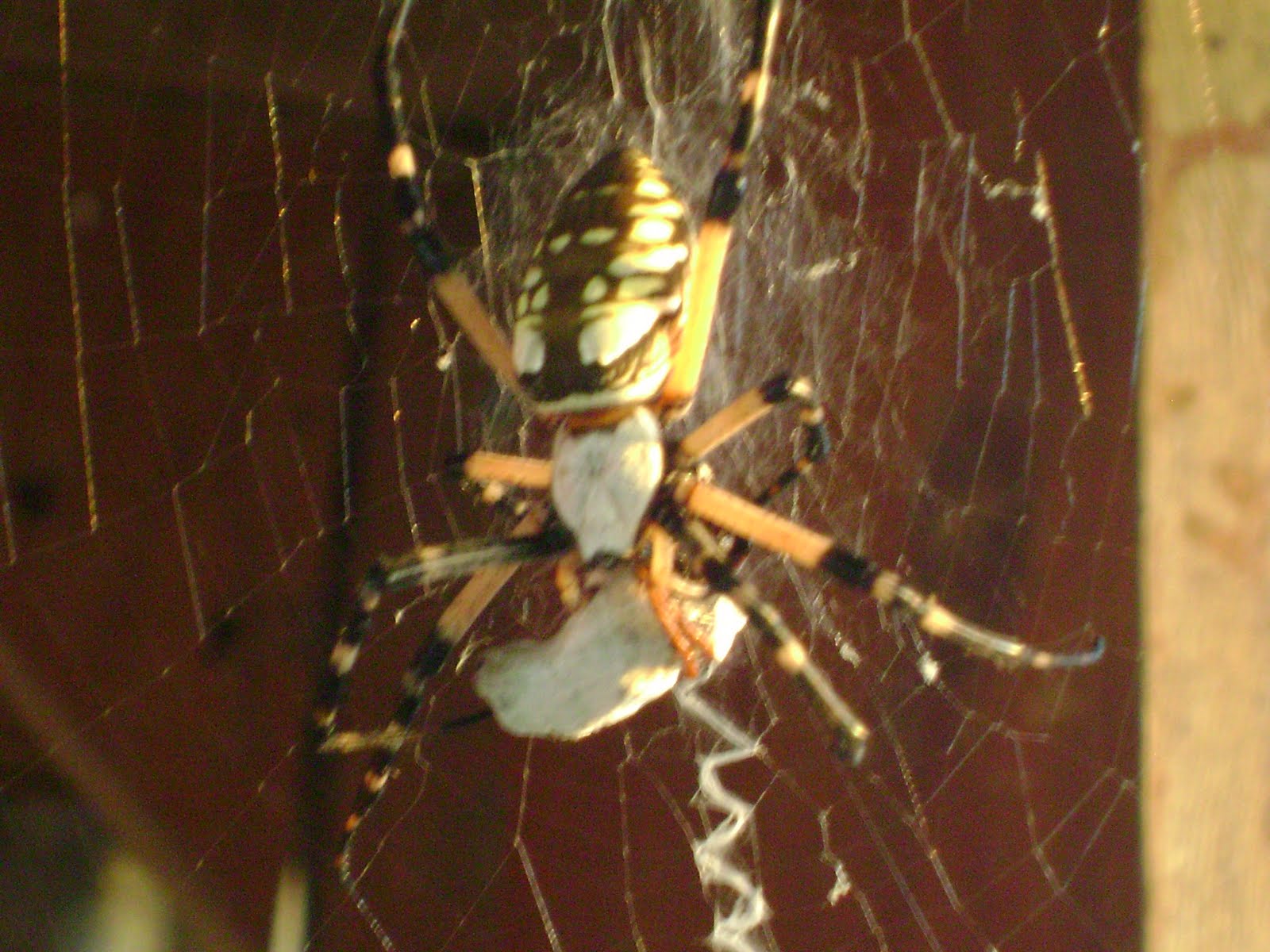
Common Garden Orb Spider

I began my day inspired by a simple spider. Biodiversity is quite simple in that when the garden is viewed as a natural canopy for which habitat survives, it begins to unfold a relationship between each living thing. 

The picture of this spider was taken in my garden during the summer when an unusual outbreak of grasshoppers occurred. 

It had been approximately 4 years since I had last used pesticides in the garden. I also had an unusual population of garden spiders this year. This spider has her juicy meal all wrapped up for lunch. 

Grasshoppers can munch down the vegetable patch very quickly and I found very minimal damage. I had made an allowance for natural predators to live in my garden by not killing them. 

Some may find the garden orb spider creepy, some may find her beautiful, but I must say I find her very helpful.

We must all spread the good news that nature works without our help. 

I was quite thankful that as my neighbor was about to spread pesticides on her hay fields to kill the grasshoppers, she had an open heart to our message and didn't do it. 

How much more could I ask that we didn't have run off from pesticides washing down into the creek and a little more nature could live.


Bumblebee and Mammoth Grey Stripped Sunflower

As you begin your plight into organics, just remember that biodiversity doesn't happen over night. If your veggies aren't perfect and some things dwindle, keep in mind that it takes a little time for nature to recover

Things you can't see with your eyes are coming into place. The relationships to consider are your soil, plants, water and light. 

There is life in the soil that must be restored. Little micro organisms and earthworms that you cannot see. The best you can do is to begin composting. 

You should select plants that are native to your area and organic heirloom vegetables for your region.

 Rain water is full of minerals and nutrients which is the best source of water to have. You simply cannot get the same benefits from your water sprinkler so perhaps a rain water collection system might be considered. 

Using the correct amount of light to suit the needs of specific plants all plays a vital part in the success of your garden and landscape.

 But most importantly you must begin to see your backyard as a natural canopy with a forest floor. Not  a perfectly manicured lawn and not planting in exact rows. But mixing each specie with a companion to share its space. 

Set back and enjoy the miracles that nature provides.

Caterpillar soon to bloom into a butterfly


Happy Gardening!!
Pammy